


When the internet was invented, it was clear who it was for: humans. Every website, every app, every online store was designed for human comprehension. Colors, fonts, menus, and the ever-present “Accept Cookies” button. For thirty years, the internet was a world in which only one species navigated: us.
That is changing now. Quietly, but fundamentally. Because the internet has new inhabitants. And they see the world through entirely different eyes.
The End of Software That We Operate Ourselves
Let me start with an observation that explains a great deal. For decades, companies have been buying software so that humans can do the work. ERP systems, CRM platforms, project management tools. All of these are instruments that we have to operate. The software does nothing on its own. It waits for someone to click, type, enter. Without a human, nothing happens.
That is now being turned on its head. Completely.
What is emerging is not better software that we operate more efficiently. It is AI agents that do the work themselves. We no longer use a tool to accomplish a task. The AI takes on the task. Independently. From start to finish. Nobody buys software for the sake of having software. Companies want someone who does the work. And that is exactly what is happening right now: for the first time, the software does the work.
Tools Are Becoming Colleagues. And It Starts with the Juniors.
The difference from what most people know is fundamental. ChatGPT, Copilot, a clever text field you ask questions. That is already the past. It was the first step. But it was still software that we operated. We asked the questions. We processed the answers. We did the work. Just a little faster.
The next generation is different. AI agents no longer answer. They act. They execute processes, take over tasks, communicate externally. Like a colleague, not like a tool.
And as with every great transformation, it starts at the beginning: with the junior hires. Think of a smart, tireless employee fresh out of university. They research quickly and thoroughly, compile information from hundreds of sources, prepare decision briefs, answer emails, coordinate appointments, create presentations from templates, maintain data. They even make phone calls. All of it around the clock, without breaks, without sick days.
The deep product knowledge of an engineer with twenty years of experience? The intuition of a sales director who has known their clients for a decade? The gut instinct of a project manager who senses when a timeline is about to slip? That is coming next, the pace of development is breathtaking. But it starts where the need is greatest and the entry point most natural: gathering, structuring, preparing, and passing on information. The assistance work, the groundwork, the grunt work that devours endless hours in every company and for which there are barely any people left on the job market.
The comparison that captures it best: a chatbot is a calculator. An AI agent that works like a colleague is a talented junior who clears the path for your best people. And like every good junior, they will learn fast.
At 506.ai, we call these evolved AI agents “Kollega.” Because they are not treated as software but as what they actually are: digital team members. With a manager who defines tasks. With an onboarding process that works like it does for any new hire. With measurable results. You don’t buy a Kollega. You hire one.
But These New Colleagues Need a Different World
Now it gets interesting. What does a digital junior actually do all day? They research. They compare. They gather information from a wide range of sources, summarize it, and pass it on: to sales, to procurement, to customer service. They are constantly moving through the internet, through internal systems, through databases.
And this is where we hit a problem that most leaders don’t yet have on their radar: these digital sales assistants, project coordinators, and clerks need an entirely different infrastructure than we humans do. Our systems and the internet were built for human eyes and human hands. For an AI agent, a beautifully designed website is about as useful as a painting to someone who needs the phone number written inside it.
Imagine sending a new employee out to compare supplier prices. A human opens ten browser tabs, scrolls through product pages, skims PDFs, calls the sales rep. An AI agent can do all that in principle. But it has to fight through cookie banners, interpret JavaScript animations, and decipher dropdown menus that were never designed for it. It’s like sending your best employee into a city where every sign is written in a language they can’t read.
A Second Layer Is Emerging. Quietly.
What is happening right now is one of the most fascinating developments in digital history. And most people are completely overlooking it. Something like a second layer of the internet is forming. Not planned by any single company, but as a natural consequence of what happens when billions of AI agents start using the web.
The Future Today Strategy Group, one of the world’s most respected foresight consultancies, calls it the “Model Web.” In their article “The Next Internet Isn’t For Us,” they describe a world in which AI agents no longer consume the internet as outsiders, scraping websites built for humans, but as equal participants for whom dedicated access points and formats are being created.
In the 1990s, the internet was built for reading. In the 2000s, it was rebuilt for participation: comments, likes, social media. Now an internet for working is emerging. For digital workers who don’t click, but act.
And this doesn’t only affect the public internet. The internal software landscape of companies is facing the same upheaval. When AI agents are meant to maintain customer data as digital sales assistants, process cases as clerks, or monitor deadlines as project coordinators, they need access to CRM, ERP, and project management systems that are built for them. Not for human hands clicking through interfaces.
The world’s largest technology companies (Google, Microsoft, Amazon, OpenAI, Anthropic) are jointly creating the standards for this. The fact that these competitors are aligning on shared infrastructure almost never happens in this industry. It’s as if every car manufacturer in the world had simultaneously agreed on a single charging plug. A sign of how fundamental this shift truly is.
When the World Opens Up for the Newcomers
Now put these two developments together. On one hand: AI that no longer waits to be operated, but does the work itself. On the other: an internet and a software ecosystem that are growing in ways that allow these digital colleagues to navigate them the way humans navigate a well-signposted city.
What happens when both converge? Your digital assistant becomes a field agent. They compare suppliers on their websites, because those websites offer machine-readable access points. They book appointments with business partners, because their systems can speak to each other. They research market trends and put a summary on your sales team’s desk every morning that used to cost half a day of human effort.
And here is the crucial part: they do all of this without you having to learn a new tool, operate a new interface, or introduce a new process. You define the task. They deliver the result. That is the paradigm shift: you don’t work with software. Software works for you.
The Invisible Company
This is where it becomes truly relevant for leaders. Because the Model Web won’t just change how AI agents work. It will change who gets found.
Remember the companies that had no website in the early 2000s? The ones that said: “Our customers know us, they don’t need the internet.” Those sentences sound absurd today. Within a few years, it will sound equally absurd when a company says: “We don’t need an AI-friendly presence.”
Because when a potential customer’s AI agent searches for the best supplier for a specific component, it won’t find the company with the most beautiful website. It will find the company that delivers relevant information in a format the agent understands. Those who don’t offer that will simply be invisible to the digital assistants of the world. And therefore invisible to a growing share of the business world.
Picture it concretely: a procurement director tasks their AI agent with finding and comparing five possible suppliers for a specialized part. Three suppliers have structured their product data and terms so the agent can evaluate them directly. Two only have a classic glossy website. Who makes the shortlist? The answer will be as obvious in three years as the question of whether a company needs a Google listing is today.
The Real Transformation Is a Human One
The biggest barrier in all of this is not technology. The technology is here. The biggest barrier is our thinking. We need to let go of two beliefs that have been deeply embedded in our understanding of work for decades: first, that software is a tool we operate. And second, that only humans can do work.
Neither is true anymore.
The skilled worker shortage, particularly acute in European SMEs, is no longer a forecast. It is daily reality. Positions remain unfilled, teams operate at their limits. Your best people, the engineer with deep product knowledge, the sales director with the client relationships, the project manager with a sense for timelines, spend far too much of their time on preparatory work that a good junior could have taken over long ago. Except those juniors barely exist on the job market anymore.
This is exactly where digital colleagues come in. Not as a replacement for the experience and expertise of your specialists. But as the reinforcement that the labor market can no longer deliver. So that your best people can finally do what they are actually paid to do.
Those who close this gap now will gain an advantage that is hard to catch up with. Not because the technology is so complicated. But because the shift in perspective takes time. Away from “I buy software and do the work myself.” Toward “I hire someone who does the work.” And time is the one thing that is running out in this transformation.
Depending on industry and market, mixed teams of humans and digital colleagues will be standard within the next three years. The internet and the software landscape will be built for both. The question is not whether this happens. The question is whether you will have a well-practiced team by then. Or whether you will just be starting to write the job posting.
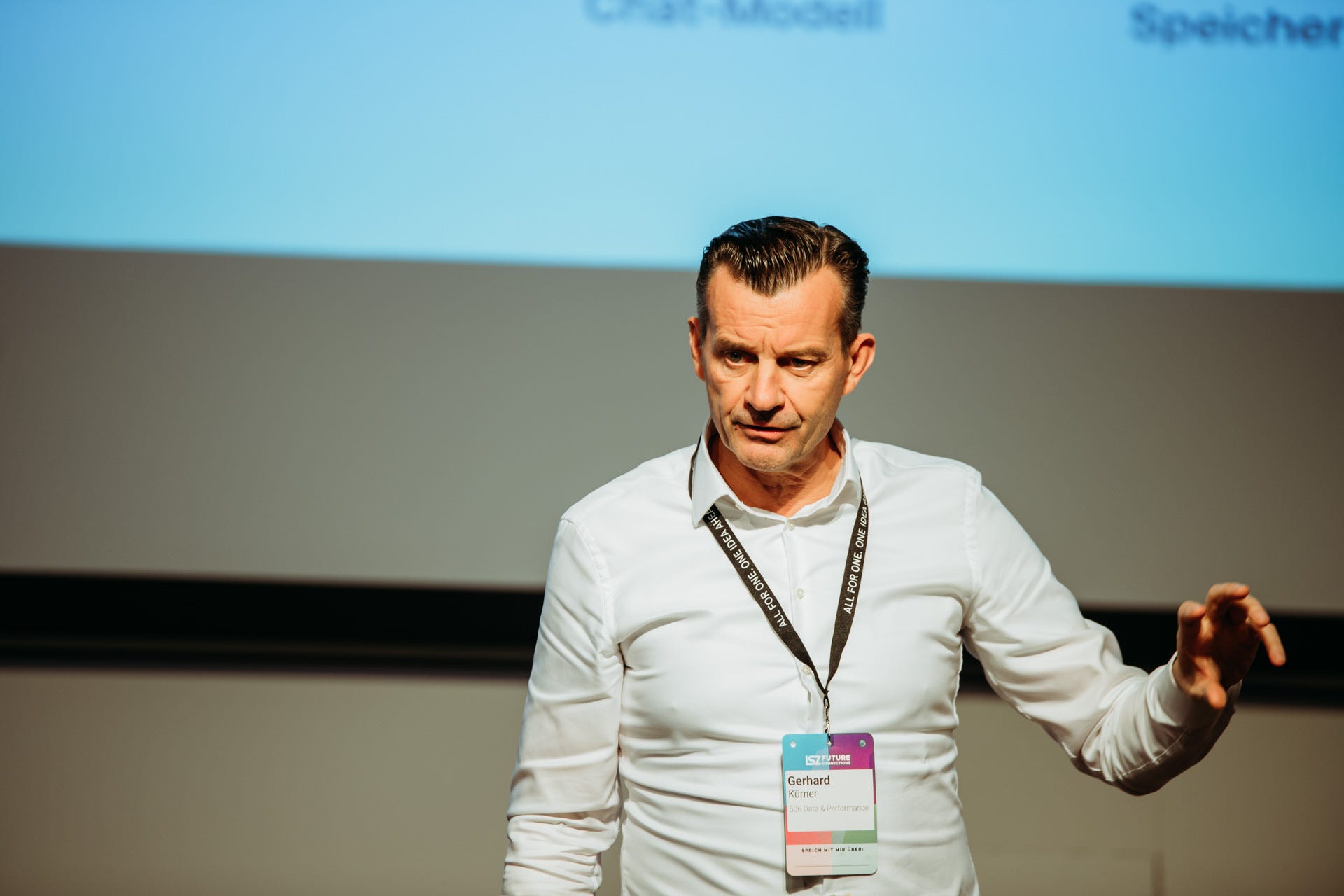
-- Gerhard Kürner, CEO 506.ai
Learn more about AI agents that work like colleagues: mykollega.ai