


Three years in, and the AI landscape is evolving faster than ever.
But one truth remains: Pure subscription models for digital consumer tools are a tough sell.
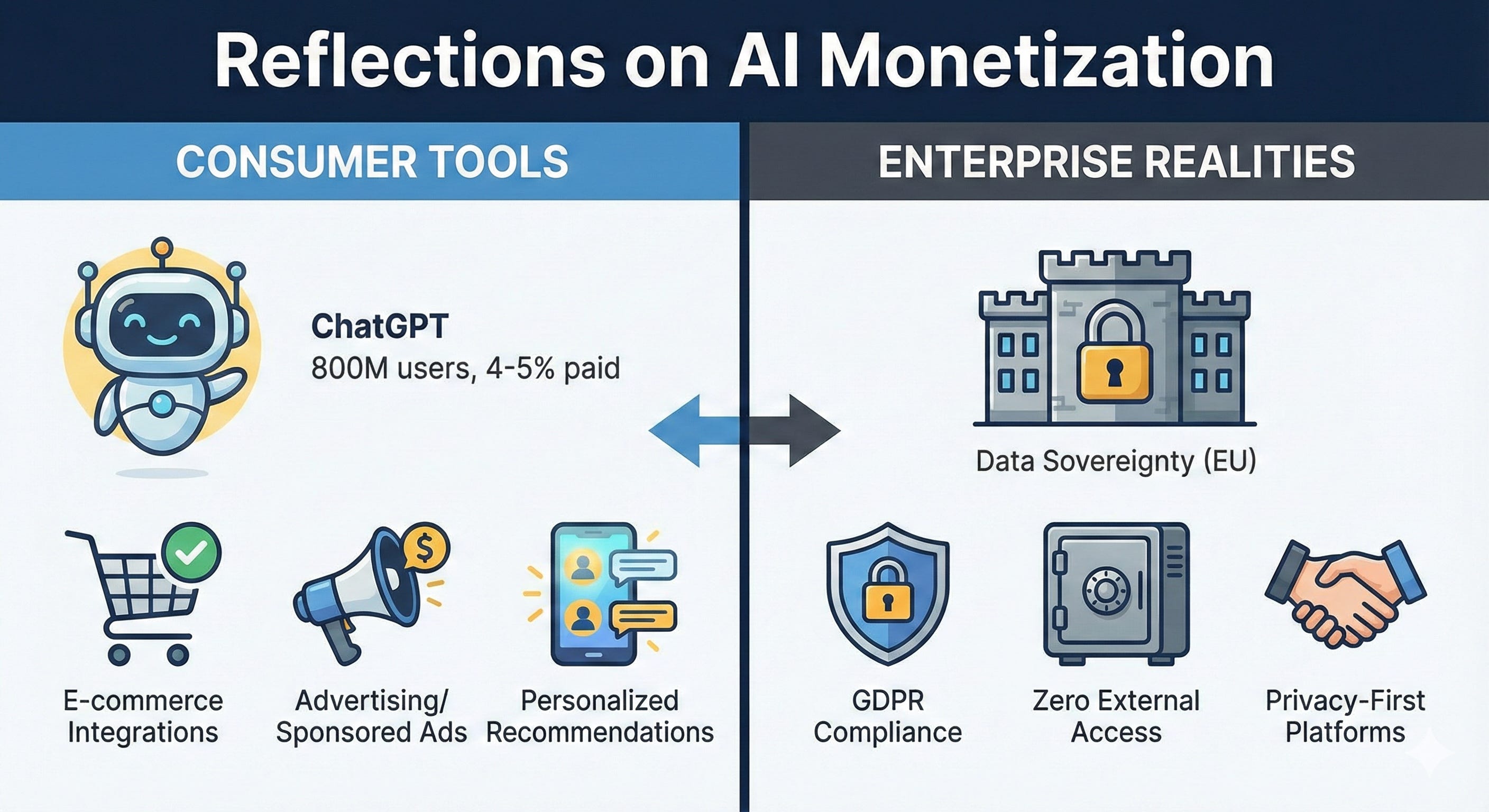
Even ChatGPT, with its massive 800 million weekly active users, has struggled to convert—clocking in at just around 4-5% paid subscribers (about 35 million on Plus/Pro plans).
That’s a stark reminder that freemium alone won’t cut it for broad consumer adoption.
So, what’s next?
E-commerce integrations and advertising. OpenAI’s already rolled out shopping features in the ChatGPT checkout live in Europe and beyond, making it seamless to buy recommended products right in the chat.
And while Sam Altman isn’t advertising’s biggest fan, the writing’s on the wall: Code snippets in the latest Android beta reveal “search ad” carousels and sponsored responses tailored to your queries. It’s coming, and for consumers, this could supercharge personalized experiences without hitting your wallet harder.
But here’s the flip side and it’s a big one for the European enterprise market.
What works wonders for consumers (targeted ads, data-driven recs) is the antithesis of what businesses demand. In the corporate world, data sovereignty is non-negotiable: Keep everything in Europe, with zero access for ad targeting or external monetization hooks.
That’s table stakes for compliance in daily operations. For enterprise AI, the path forward isn’t ads; it’s fortified, privacy-first platforms that prioritize security over scale